Behre Dolbear will be attending FMF from 13-15th January 2026 in Riyadh, Saudi Arabia. We look forward to seeing those attending.
If you would like to meet us please send a message to enquiry@dolbear.com or Linkedin.
HEADLINES
Rio Tinto’s bid for Glencore piles pressure on BHP
Gold investors stay bullish after record rally in 2025
La Mancha sells down Endeavour Mining stake
Japan sets sail on rare earth hunt as China tightens supplies
University of Arizona research aims to turn mine waste into US critical minerals domestic resource
Portugal’s government backs Savannah’s lithium mine with $128M grant
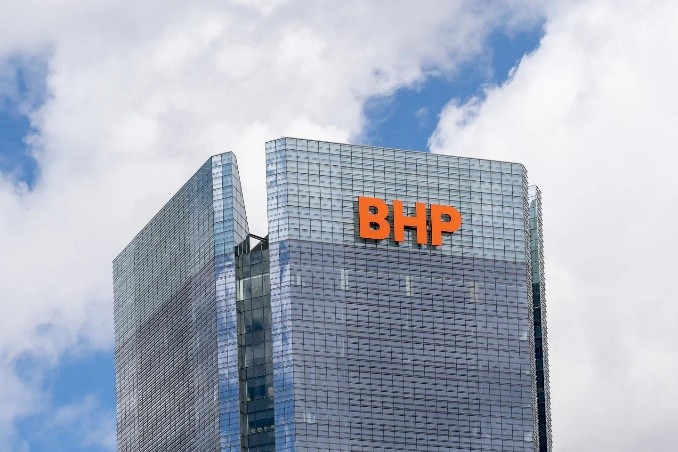
Rio Tinto’s bid for Glencore piles pressure on BHP
Rio Tinto’s talks to buy Glencore and create a new global industry leader could spur consolidation efforts across the copper-hungry mining sector and heap pressure on BHP, currently the world’s biggest miner, to respond.
If the bid succeeds, and depending on any final value, it could rank among the biggest 10 M&A deals yet and it reflects an appetite for scale that bankers have said could drive mega-deals in 2026.
“This is yet another example that the mining space is consolidating and the big firms are being forced to do corporate action to create value,” Mark Kelly, CEO at advisory firm MKI Global, said.
Last September, London-listed miner Anglo American announced what was then the sector’s second biggest M&A deal, with a plan to merge with Canada’s Teck Resources and forge a new global copper-focused heavyweight. The deal awaits regulatory clearance.
BHP under pressure to act
Half a dozen analysts, investors and bankers told Reuters that BHP, which has a market capitalization of $161 billion, is the most likely spoiler of Rio’s bid talks with Glencore, which could create a company worth almost $207 billion.
If BHP keeps out of the current talks, it may consider another deal to retain its leadership.
Gold investors stay bullish after record rally in 2025
After one of the most explosive rallies in modern market history, few investors expect gold to pull off a repeat in 2026. But many top money managers are still betting on further gains, arguing that the forces that propelled bullion to a record remain in place.
Gold surged 65% in 2025 — its strongest performance in nearly half a century — as retail and institutional investors piled in alongside central banks. In a year where almost every tailwind supporting the precious metal collided, from falling interest rates to geopolitical tensions, bullion even pushed through an inflation-adjusted high that had held since 1980.
Bloomberg spoke with more than a dozen money managers, whose firms collectively handle trillions of dollars of assets, to gauge sentiment after the historic year. Most of them said they’ve opted not to take too much money off the table, holding conviction in the metal’s longer-term appeal.
“We continue to expect gold to rally in 2026, as the drivers of its strong run remain intact,” said Ian Samson, a portfolio manager at Fidelity International. Samson trimmed his position during a frenzied stretch of October but has since added back, citing central bank buying, declining interest rates and high fiscal deficits as supportive factors.
Investors also pointed to waning confidence in major developed-market currencies — driven by attacks on central bank independence and rising sovereign debts — as a key pillar of support for bullion. Swelling public debt in advanced economies fueled political discord through last year, from a congressional standoff in the US and paralysis in France to scrutiny of a record budget under Japan’s new leadership.
Gold is “basically an anti-fiat currency play now more than anything else,” said Mike Wilson, chief investment officer and strategist for Morgan Stanley. That view gained traction in the latter months of 2025, as the so-called debasement trade took hold and investors from Ken Griffin to Ray Dalio pointed to gold’s rise as a warning signal.
London-based La Mancha Resource Capital is reducing its stake in West Africa-focused gold producer Endeavour Mining (LSE, TSX: EDV) after its shares nearly tripled in value in a year.
The finance firm’s Luxembourg-based fund sold 3.5% of Endeavour in a bought deal at C$71.25 per share worth about C$605 million ($437 million), trimming its holding while remaining a major shareholder. The shares closed at C$77.61 apiece on Thursday, a 191% gain from a year earlier. The stock fell 6.1% on Friday morning to C$72.91, valuing the company at C$17.5 billion ($12.6 billion).
Shares in most major gold companies have more than doubled over the past 12 months as geopolitical tensions and central bank bullion buying has powered the yellow metal about 65% to successive record highs. The La Mancha fund, which had about $1.7 billion under management in November, held 35.3 million shares, or about 15% of Endeavour on a non-diluted basis before the sale. Now its stake stands at about 11%.
Japan sets sail on rare earth hunt as China tightens supplies
Chikyu is a Japanese scientific drilling ship built for the Integrated Ocean Drilling Program.
A Japanese mining ship departed on Monday for a remote coral atoll to probe mud rich in rare earths, part of Tokyo’s drive to curb its reliance on China for critical minerals as Beijing tightens supply.
The month-long mission of the test vessel Chikyu near Minamitori Island some 1,900 km (1,200 miles) southeast of Tokyo, will mark the world’s first attempt to continuously lift rare earth seabed sludge from 6 km (4 miles) deep onto a ship.
Japan, like its Western allies, has been reducing its dependence on China for the minerals vital to the production of cars, smartphones and military equipment, an effort that has taken on urgency amid a major diplomatic dispute with Beijing.
“After seven years of steady preparation, we can finally begin the confirmation tests. It’s deeply moving,” Shoichi Ishii, the head of the government-backed project told Reuters, as the vessel departed the port city of Shizuoka on a bright sunny day, with a snow-capped Mount Fuji in the background.
“If this project succeeds, it will be of great significance in diversifying Japan’s rare earth resource procurement,” he said, adding that recovering the key minerals from 6 km below sea level would be a major technological achievement.
The vessel, with 130 crew and researchers, is scheduled to return to the port on February 14.
University of Arizona research aims to turn mine waste into US critical minerals domestic resource
A University of Arizona–led, $3.6 million Arbor-funded research initiative is assessing whether Arizona’s historic copper mine tailings—amounting to billions of tonnes—can be economically reprocessed to recover both critical minerals and hazardous elements while reducing environmental risk.
The University Tailings Center initiative, led by Dr. Isabel Barton, Associate Professor of Mining Engineering, is focused on recovering critical minerals such as arsenic, zinc and possibly tungsten from copper mine tailings, using advanced geometallurgy and mineral characterization to turn mine waste into a domestic resource.
The project combines remote sensing, industry data-sharing, field sampling, mineralogical characterization, and techno-economic analysis, with early findings suggesting unexpected mineral occurrences at some sites, according to Barton.
While not a full resource definition, the work aims to de-risk future reprocessing and byproduct recovery, including potential changes to current mining flowsheets to prevent valuable elements from first entering tailings. Finding out how much actual usable metal can be extracted from the tailings is the end goal of the project.
Portugal’s government backs Savannah’s lithium mine with $128M grant
The Barroso mine could become the first European supplier of lithium-bearing spodumene.
London-listed Savannah Resources said on Friday it had been awarded a 110-million-euro ($128 million) grant by the Portuguese government for its northern Portugal lithium mine, showing official backing for a highly contested project.
The company said around 82 million euros of the non-reimbursable grant would fund the initial capital expenditures of the project in Portugal’s Barroso region, while the remainder will be linked to operational performance milestones.
The estimated reserves of the Barroso deposit of spodumene – one of lithium-bearing minerals – stand at more than 39 million metric tons, making it the largest such deposit in Europe, the company said.
The success of projects like Savannah’s in Portugal is seen as a key test of Europe’s ability to reduce its dependence on imports from China and other countries for lithium and other materials essential to the transition to clean energy.
However, Savannah has faced strong opposition from local residents and environmentalists because Barroso has been a World Heritage site for agriculture since 2018.