Equinox sells Brazilian operations to CMOC for over $1B
Massive critical minerals deposit found in Utah
Illegal miners are digging gold at a $4.8B Newmont site in Peru
Mali returns possession of seized gold to Barrick
Greenland grants 30-year licence to EU-backed graphite project
Rare earth trade talks top mining trends: Wood Mac
Equinox sells Brazilian operations to CMOC for over $1B
Equinox Gold (TSX, NYSE-A: EQX) has sold its Brazilian operations to China’s CMOC Group in a deal worth over $1 billion, the Canadian gold miner announced in a press release on Sunday.
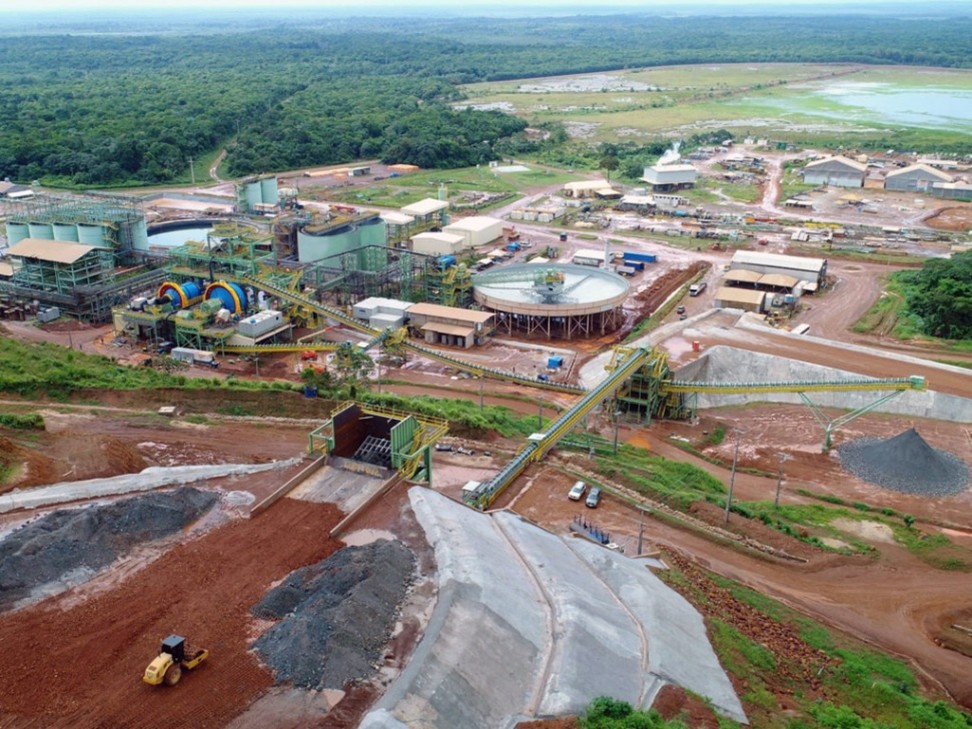
Equinox Gold’s Aurizona mine in Brazil
The assets included in the sale are Equinox’s 100% interest in the Aurizona mine in Maranhão, the RDM mine in Minas Gerais, and the Bahia complex, consisting of the Fazenda and Santa Luz mines. Together, they are expected to deliver 250,000–270,000 oz. of gold production this year, according to company guidance.
The total consideration comprises an upfront cash payment $900 million due on closing, plus a contingent cash payment of up to $115 million linked to the mines’ production, due one year after closing.
Pivot to North America
The asset sale, says Equinox CEO Darren Hall, is a “pivotal step” that positions the company as a pure North American-focused gold producer “underpinned by robust cash flow and a tier-one growth profile.”
Following the divestment, the Equinox Gold portfolio will headlined the Valentine and Greenstone mines in Canada, both of which were brought into commercial production over the past 13 months, and the older Mesquite mine in California that has been active since the late 1980s.
“Monetizing our Brazil operations simplifies the portfolio and enables the company to deploy capital toward higher-return, lower-risk, organic-growth opportunities in Canada and the United States,” added Hall.
This year, the Greenstone mine is expected to contribute 220,000 – 260,000 oz. of gold, nearly matching the total combined output of the Brazilian assets. The Valentine mine, which hit commercial production a month ago, is expected to add 175,000–200,000 oz. a year once in full operations. The Mesquite mine is also forecast to produce 85,000–95,000 this year.
Equinox’s future growth profile also includes El Limón and Libertad mines in Nicaragua, which it acquired through its $1.8 billion takeover of Calibre Mining earlier this year.
A Utah-based mining company says it has discovered a massive deposit of rare earths and other critical minerals, calling it potentially “one of North America’s most significant” finds to date.
Ionic Mineral Technologies — also known as Ionic MT — revealed last week that assays from its fully permitted Silicon Ridge project in Utah confirmed it as a halloysite-hosted ion-adsorption clay (IAC) system, which, compared to the conventional “hard-rock” geological system, is easier to extract minerals from.
According to the company, IAC represents the same geological formation that supplies approximately 35-40% of China’s total rare earth production and over 70% of the world’s heavy rare earth elements.
Additionally, Ionic MT characterized the deposit as an “IAC-Plus” profile, referring to the magmatically enriched grades of not only rare earths but also a suite of critical minerals including gallium, germanium, rubidium, cesium, scandium, lithium, vanadium, tungsten and niobium.
Ready for production
Andre Zeitoun, founder and CEO of Ionic MT, calls the discovery a “watershed moment” for America’s resource independence. “For the first time, we have a domestic, shovel-ready source for a full spectrum of critical minerals, all extractable with a faster, cleaner process than traditional hard rock mining and extraction,” he stated in a press release dated Dec. 12.
In an interview with the Wall Street Journal last week, he said the Silicon Ridge project “may be the most significant critical mineral reserve in the US.” The project hosts as many as 16 different elements used in key applications, ranging from AI semiconductor chips and permanent magnets to defense surveillance systems and energy technologies.
Importantly, as noted by Zeitoun, the project already has mining permits in place, supplemented by an existing 74,000-square-foot processing facility in Provo, where the company is headquartered. This would enable “a rapid timeline to commercial production,” it said.
Illegal miners are digging gold at a $4.8B Newmont site in Peru
A multi-billion-dollar gold project owned by the world’s biggest bullion producer has been invaded by illegal diggers in northern Peru, according to a top government official.
Newmont Corp.’s stalled Minas Conga project in the Cajamarca region “is being partially exploited by illegal mining,” Prime Minister Ernesto Alvarez told reporters Friday. Newmont didn’t immediately comment.
Denver-based Newmont is the latest global company to face informal miners as near record prices increase incentives for diggers in poor rural areas of the country. Southern Copper Corp., First Quantum Minerals Ltd. and MMG Ltd. have said illegal miners are operating on their concessions, delaying progress.
Development at the estimated $4.8 billion Conga project was halted shortly after receiving environmental permits in 2010 in the wake of farmer opposition that spiraled into violent protests. Newmont still holds the mineral rights.
“When legal mining that meets high standards is not developed, it cedes the space to illegal mining, which pollutes and uses violence,” said Alvarez, the top deputy to interim president Jose Jeri.
Peruvian authorities are grappling with how to deal with the surge in illegal mining. The government supported the extension of a controversial permit known as Reinfo that allows informal diggers to operate with loose requirements. Peru’s mining industry chamber SNMPE heavily opposes Reinfo.
A Malian judge has ordered the return of possession of 3 metric tons of gold seized nearly a year ago from Barrick Mining’s Loulo-Gounkoto complex to the Canadian miner, according to two people familiar with the matter.
The gold, worth about $400 million, was seized by a military helicopter in January following a confiscation order from a Malian judge. It has remained at the BMS bank in Mali’s capital, Bamako, since then, according to both sources.
While the judge ordered possession of the gold to be returned to Barrick, the miner will be responsible for transporting the gold out of the bank vaults, they said.
The two sides reached an agreement last month to resolve their dispute over Barrick’s operations in the West African country after two years of negotiations. The disagreement, over the implementation of a new mining code introduced by the military-led government, led to Barrick suspending operations of its gold mining complex in January, and a Malian court-appointed provisional administrator taking control in June.
Greenland grants 30-year licence to EU-backed graphite project
GreenRoc Mining Plc (AIM: GROC) jumped on Tuesday after the Greenland-focused critical minerals explorer secured a 30-year exploitation licence for its Amitsoq graphite project, paving the way for production.
The Amitsoq graphite project is located in the Nanortalik region of southern Greenland
Greenland’s business and mineral resources minister, Naaja Nathanielsen, signed off on the licence earlier this week, marking the third such permit granted by the Arctic island this year.
“(The) exploitation licence is the result of focused political efforts to make Greenland more attractive for responsible investments, while seriously taking into account the concerns for people and the environment,” Nathanielsen said in a statement.
GreenRoc CEO Stefan Bernstein described the licence as “a very important milestone,” highlighting graphite’s important role in the energy transition and Europe’s lack of a secure supply.
Shares of GreenRoc surged as much as 19% following the announcement, before paring gains. The company has a market capitalization of approximately £7.5 million ($10 million).
High-grade deposit
Located in the Nanortalik region of southern Greenland, the Amitsoq project represents one of the world’s highest-grade graphite deposits, with an estimated JORC-compliant resource of 23 million tonnes at an average grade of 20.41% graphitic carbon, for a total graphite content of 4.71 million tonnes.
The site hosts a historic open-cut mine that was last active in 1922, when expertise on the separation of natural graphite flakes was still in a nascent stage. GreenRoc is focused on fast-tracking the development of the mine, which, once operational, is expected to produce approximately 80,000 tonnes of graphite concentrate annually.
Rare earth trade talks top mining trends: Wood Mac
The shift of rare earth elements to the centre of global trade negotiations is a leading trend in mining, according to a new report by natural resources consultancy Wood Mackenzie.
It’s number two on its list of mega-trends in energy and mining this year as governments try to chip away at China’s control of more than 80% of processing and the vast majority of high-performance magnet output. The 15 elements of the Periodic Table’s lanthanide series, plus scandium and yttrium, are considered rare earths.
Beijing’s tightening of export controls in April 2025, including special licences for selected rare earths and magnets, sharpened the trade talks push, prompting a wave of bilateral frameworks, G7 initiatives and project-level offtake deals aimed at locking in non-Chinese supply.
“The extraordinary leverage of rare earth elements in trade negotiations was a profound demonstration of both national industrial strategy and China’s hold on high-tech manufacturing,” Wood Mackenzie’s Malcolm Forbes-Cable said in the report released Thursday.
The 2025 recap shows rare earths moving to the centre of global energy security as China’s dominance in refining and magnet materials gives it growing geopolitical leverage. That backdrop explains the surge of US, European and Canadian rare earth deals in 2024–25: Governments are trying to build resilient, non-Chinese supply chains for technologies ranging from electric-vehicle motors to defence systems. Rare earth agreements no longer appear niche but part of a broader push to secure strategic materials for the energy transition.
Rare earth elements refined supply outlook by region and use
US deals
The leading trend on Wood Mackenzie’s list is the United States emerging as the world’s leading liquid natural gas exporter. The UK North Sea’s accelerating loss of value; Europe’s petrochemical sector contracting as production grows elsewhere; and artificial intelligence driving a sharp rise in electricity demand across major economies also made the rundown.