Behre Dolbear wishes you all a wonderful Christmas and a prosperous 2026!
HEADLINES
Chile regulator approves Codelco-SQM lithium deal hours after announcing audit
Korean proxy fight threatens to derail Trump’s big zinc bet
MEGAMINES: Top 10 most capital intensive bulk mining projects
Over 60% of critical minerals demand met through global trade: IEF
Namib Minerals to restart mothballed Zimbabwe gold mine in February
ERG signs long-term gallium supply deal with Mitsubishi
Chile regulator approves Codelco-SQM lithium deal hours after announcing audit
Chile’s comptroller on Friday approved, with some guidelines, an agreement between state copper giant Codelco and local miner SQM to operate a joint lithium venture in the Atacama salt flat.
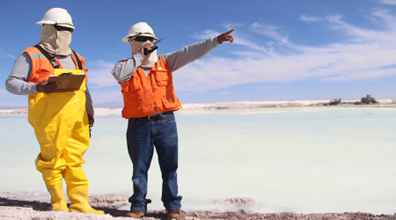
SQM has a deal with Codelco to mine lithium in northern Chile.
The resolution comes hours after the top regulator announced it would launch an “unprecedented audit in response to complaints from members of parliament regarding the Codelco-SQM agreement.”
The regulator said that it was prevented from ruling on most of the claims due to previous court rulings, but listed some guidelines in its official approval, including that Codelco must maintain a stake of more than 50% in the joint venture.
The companies had requested the comptroller’s approval as the final step needed to finalize the agreement after several other national and international regulators cleared the deal.
Codelco and SQM want to create a joint venture to produce lithium in the Atacama salt flat, as part of President Gabriel Boric’s plan to expand state control over the industry and increase production.
Legislators have questioned why the agreement was reached in direct negotiations rather than a public bidding process. They also questioned why Codelco picked SQM, which has pending lawsuits with the tax authorities, among other things.
Korean proxy fight threatens to derail Trump’s big zinc bet
Korea Zinc’s Onsan smelter
The Trump administration’s investment in a US zinc development has thrust it into the middle of a South Korean proxy fight, an example of how the government’s push for equity stakes in critical industries is facing free-market blowback.
The administration announced earlier this week it struck a joint venture with Korea Zinc to back construction of a $7.4 billion smelter project in Tennessee that would bolster US production of key critical minerals. But the reaction has been mixed, with shares fluctuating as Korea Zinc’s largest shareholders balk at the structure of the deal.
The activist investors — Young Poong Corp., and MBK Partners Ltd. — filed an injunction this week in a South Korean court to halt a share issuance to fund the new smelter, according to an emailed statement, arguing the move was aimed at evading the proxy battle.
The case has the potential to disrupt the administration’s effort to spur domestic production of critical minerals in order to wean the nation off Chinese supplies, a key goal of President Donald Trump’s economic agenda. It also threatens to complicate ties between Seoul and Washington, which were already roiled earlier this year by the president’s tariff push.
Critics say the administration’s methods, which include taking direct stakes in critical mineral producers and other firms in sensitive industries, put their goals at risk by inserting the government into business dealings outside of its control.
MEGAMINES: Top 10 most capital intensive bulk mining projects
With public and government attention shifting to critical minerals, energy transition metals and specialty commodities, and retail investors all-in on rampant gold and silver, here’s a reminder of where the bulk of investments in global mining and metals goes.
From 2000 to 2023, metals and mining revenues grew by $1.7 trillion, a jump of roughly 75%, affording the industry a 70% slice of the overall materials business which also includes plastics, pulp, and building materials. As a whole, materials represent some 7% of the global GDP.
However, battery and other metals associated with decarbonisation – even when lumping in bellwether copper – hardly makes up 15% of global metals and mining revenues.
Take rare earths, the commodities du jour: The market size of mining, and metal and alloy production of the 17 elements used in defence applications and green energy for wind turbines, robotics, motors for EVs and drones hover around a skimpy $20 billion.
Over 60% of critical minerals demand met through global trade: IEF
More than 60% of global critical mineral demands is met through international trade, underscoring the deep structural interdependence between producing and consuming economies as the deployment of clean energy accelerates, according to the International Energy Forum (IEF).
This level of reliance on international trade, the group said, makes the world’s supply chains highly sensitive to geopolitical tensions, export controls, and refining bottlenecks, as minerals become the backbone of electrification, digital infrastructure and advanced manufacturing.
In its latest report titled A Critical Minerals Enabled Energy Future, the IEF highlights the mounting supply-side vulnerabilities as demand for the main energy transition minerals rises sharply through 2040. In particular, the copper and nickel markets may face material shortfalls by the mid-2030s, it said, while lithium supply remains concentrated in just a handful of countries.
At the same time, government responses are accelerating just as quickly. According to IEF estimates, the number of critical mineral policies issued since 2020 nearly doubled the combined total of the previous two decades, with countries increasingly turning to strategic planning, export controls and domestic processing mandates to shield supply chains.
Namib Minerals to restart mothballed Zimbabwe gold mine in February
Namib Minerals will restart operations at its mothballed Redwing gold mine in February as part of the company’s broader $300 million investment plan in Zimbabwe, its chief executive said on Friday.
Redwing currently has an estimated 2.5 million ounces of gold and is the largest resource base in the group’s Zimbabwean portfolio, which includes the operating How mine that has produced nearly 2 million ounces since 1941.
“Following the completion of technical studies, development work and infrastructure rehabilitation, we are targeting annual gold production of approximately 300,000 ounces from Redwing alone, as part of our broader production strategy across three assets in Zimbabwe,” Namib Minerals CEO Ibrahima Sory Tall said in a statement.
The company said it will also start an exploration program as part of a longer-term plan to double Redwing’s resource base to about 5 million ounces.
Namib Minerals owns three gold mines in Zimbabwe, including another mothballed operation, Mazowe mine, which produced 1.36 million ounces between 1962 and 2018.
Zimbabwe’s gold mines, which have for years faced viability struggles due to currency and policy volatility, are starting to expand output in response to record-high bullion prices.
The southern African country on December 17 reversed plans to double its gold royalty rate to 10% following protests by miners and industry groups. At current gold prices, the gold royalty rate of 5% will continue to apply, only doubling if the price goes above $5,000 an ounce.
ERG signs long-term gallium supply deal with Mitsubishi
Mining group Eurasian Resources Group has signed a long-term deal to supply gallium to Mitsubishi Corporation RtM Japan Ltd, a subsidiary of Japanese trading house Mitsubishi Corp, it said on Saturday.
Kazakhstan, which currently produces no gallium, is set to become the world’s second-largest producer of this critical mineral after China once ERG starts production in the third quarter of 2026.
Gallium is on the US and European Union’s lists of critical minerals. It is needed for the manufacture of semiconductors for electronics and radar systems and missile guidance electronics in aerospace and defence.
“Gallium is crucially important as it is an integral part of modern technologies, especially electronics,” Shukhrat Ibragimov, ERG board chairman and CEO, said in a statement.
“By developing domestic operations, we can transform strategic resources into competitive products and strengthen Kazakhstan’s position on the market for high-technology materials.”
Last month, China said it had suspended a ban on exports of gallium, antimony and germanium to the United States following a meeting between Presidents Xi Jinping and Donald Trump, but the metals remain subject to broader export controls requiring shippers to first obtain licences from Beijing.