Ground View: How industry leaders are shaping Pakistan’s mining future
India, Brazil sign mining pact as Modi targets $20B trade in five years
Kazatomprom inks massive supply deal with India
Metals volatility may slow pace of mining M&A, BMO bankers say
Gécamines Grants Glencore Land Access at KCC
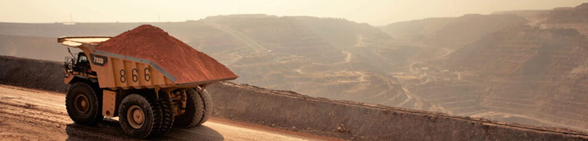
Glencore reached an agreement with Gécamines regarding land access for Kamoto Copper Co. (KCC), the copper and cobalt producer in the Democratic Republic of Congo, jointly owned by Glencore (75%) and Gécamines (25%). This agreement unlocks a comprehensive package of long-term mining titles and leases, which is expected to expand the tailings storage facility and waste rock dump capacities, enabling KCC life of mine extension. The agreement is also expected to maximize the recovery of ore reserves within existing KCC exploitation permits, including from KOV and T17 mining areas, while preserving Gécamines’ rights to any ore reserves extracted from within the leased land package.
“This agreement will allow us to unlock the full potential of KCC by increasing efficiencies at the mine, facilities and other key infrastructure requirements. It will also help us to achieve our approximately 300,000 metric ton per year copper production long-term target and extend KCC’s life of mine into the mid-2040s,” said Mark Davis, COO of Glencore Copper Africa Region.
“The agreement aligns with the Glencore Copper Strategy of continuing to offer volume upside and longevity to Glencore’s Copper Africa Region,” said Jon Evans, industrial lead copper at Glencore.
The closing of the agreement is subject to the registration of the mining titles lease agreements in the mining cadastre, which is expected to occur in the coming months.
Ground View: How industry leaders are shaping Pakistan’s mining future
The Hunza Valley is a mountainous valley located in the region of Gilgit-Baltistan in Pakistan.
In April, industry leaders, investors and policymakers will gather in Islamabad for the Pakistan Mineral Investment Forum (PMIF). The focus will be on large-scale opportunity: world-class copper and gold deposits, critical minerals supply chains, and renewed foreign investment.
But conferences don’t determine whether mining projects succeed. Institutions do.
Pakistan is a useful case study. The country hosts major undeveloped assets, most notably Barrick’s Reko Diq copper-gold project, one of the largest of its kind globally. After years of legal dispute and international arbitration, the project is moving forward again. The geology has never been in question. The challenge has always been coordination, regulation and execution.
That challenge is not unique to Pakistan. Across frontier markets, mining outcomes are shaped less by resource size than by what happens inside ministries, permitting offices, provincial administrations and infrastructure planning departments. Projects stall when approvals do not align, when power and transport timelines slip, or when federal and provincial authorities move at different speeds.
This layer is referred to as the institutional middle. It includes mid-level regulators managing permits across jurisdictions, engineers solving logistics constraints, university departments training future geologists, and planners sequencing roads, water and power for remote projects. This is where mineral potential either turns into operating mines or remains in feasibility studies.
Why Pakistan, why now?
Pakistan sits at a strategic crossroads. It is central to China’s infrastructure footprint through the China-Pakistan Economic Corridor, while also drawing interest from Western governments seeking diversified critical mineral supply. Political leadership has made clear that mining is a national priority. The open question for investors is implementation capacity.
India, Brazil sign mining pact as Modi targets $20B trade in five years
Brazilian President Luiz Inacio Lula da Silva and India’s Prime Minister Narendra Modi.
India moved to deepen trade ties with Brazil on Saturday, signing a pact to expand cooperation in mining and minerals as it seeks to meet rising domestic steel demand and support capacity expansion amid a global race for raw materials.
The agreement was signed in the presence of India’s Prime Minister Narendra Modi and Brazilian President Luiz Inacio Lula da Silva, who arrived in New Delhi earlier this week for a three-day visit.
Brazil is among the world’s top producers of iron ore and holds large reserves of minerals critical to steelmaking. Closer cooperation is expected to improve India’s access to raw materials and technologies needed to sustain long-term growth in its steel sector, an Indian government statement said.
Infrastructure investment
The cooperation will focus on attracting investment in exploration, mining and steel sector infrastructure, the statement said.
Kazatomprom, the world’s top producer of uranium, plans to sell a significant portion of its output to India, a move that could further tighten the global market for nuclear fuel.
In an announcement on Friday, the Kazakh state miner said has it reached a massive supply agreement representing over 50% of the company’s booked asset value with India’s Department of Atomic Energy.
Under Kazakh law, a deal of this magnitude would require shareholder approvals. As such, the company has called for an extraordinary general meeting for shareholders to cast their votes. Notice of the meeting is expected at a later date.
The deal, if approved, could potentially remove a sizeable share of uranium supply off the market. Kazatomprom is currently the world’s single-largest resource holder and accounts for about 20% of global production.
Last year, the Kazakh group produced about 67.2 million lb. uranium concentrates (on a 100% basis), which is in line with guidance and 10% higher than 2024. This year, it is expecting another 9% rise in production.
Despite this projected growth, analysts believe the global uranium market will remain in a structural deficit. Analysts at Teniz Capital, an Abu Dhabi-based investment bank, said the entire sector is undergoing a “second nuclear renaissance” that could see demand outpacing supply in the coming years.
Metals volatility may slow pace of mining M&A, BMO bankers say
The recent extreme volatility in metals markets may slow the pace of dealmaking in mining this year as wild price swings complicate transactions, according to the industry’s most active investment bank.
While interest in takeovers is being buoyed by high metals prices, strong balance sheets and growing shareholder support, getting companies to agree on the value of deals is now getting harder, said Ilan Bahar and Jamie Rogers, co-heads of global metals and mining at BMO Capital Markets.
Driving the push for deals is a race to bulk up copper portfolios amid surging demand from global electrification and the cost of developing deposits. The mining industry has seen a string of high-profile takeover attempts in the past couple years including talks between Rio Tinto Group and Glencore Plc, which fell apart earlier this month over valuation.