US launches $500M initiative to bolster critical minerals supply chain
First Quantum deals Çayeli mine to Turkish group for $340M
Op-Ed: Europe’s rare earth test begins after Finland’s drill hit
Chinese firm keeps Canada’s only antimony mine idle, raising supply chain concerns
Munitions metal tungsten outshines gold, copper in 557% rally
Spain to invest $481 million in raw materials push
US launches $500M initiative to bolster critical minerals supplychain
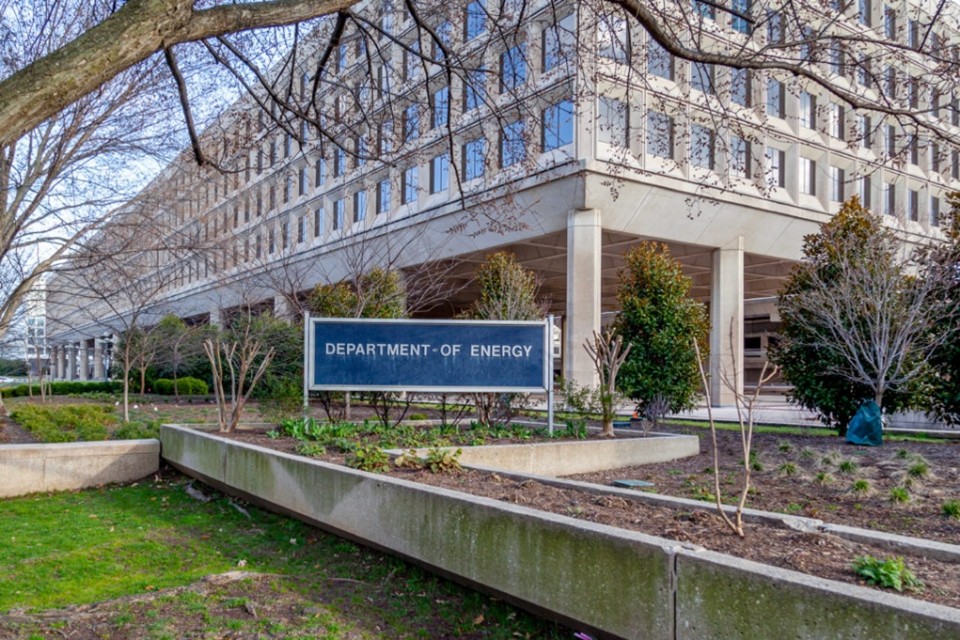
The US Department of Energy (DOE) plans to provide up to $500 million in funding to expand domestic critical minerals processing and battery materials manufacturing and recycling, as Washington seeks to reduce reliance on foreign supply chains.
The funding opportunity, issued by the DOE’s Office of Critical Minerals and Energy Innovation (CMEI) on Friday afternoon, seeks to support demonstration and commercial-scale facilities that process or recycle critical materials used in batteries and energy technologies.
The initiative targets minerals such as lithium, graphite, nickel, copper and aluminum, along with other materials contained in commercial battery systems.
“For too long, the United States has relied on hostile foreign actors to supply and process the critical materials that are essential in battery manufacturing and materials processing,” Energy Secretary Chris Wright said in a statement.
According to the DOE, strengthening domestic supply chains will help the country meet growing energy and AI-related electricity demand while supporting broader energy security goals.
Collaboration with partners
The announcement comes as Assistant Secretary of Energy for Energy Efficiency and Renewable Energy (EERE) Audrey Robertson attends the Indo-Pacific Energy Security Ministerial and Business Forum in Japan, where US officials are meeting with regional allies to discuss cooperation on supply chain resilience.
Robertson said collaboration with partners remains critical even as the US expands domestic production.
“Critical minerals processing is a vital component of our nation’s critical minerals supply base,” she said. “Boosting domestic production, including through recycling, will bolster national security and ensure the United States and our partners are prepared to meet the energy challenges of the 21st Century.”
First Quantum deals Çayeli mine to Turkish group for $340M
First Quantum Minerals (TSX: FM) will sell its Çayeli mine in Türkiye to a company controlled by Cengiz Holding as the Canadian miner raises additional capital for its priority assets.
Under a binding agreement, Cengiz Insaat, the Turkish company, will buy the copper-zinc underground mine for $340 million cash, including an advance payment of $50 million, First Quantum said in a statement. The deal is expected to close during the second or third quarter of the year.
The transaction, says First Quantum’s CEO Tristan Pascall, is a reflection of “the company’s disciplined approach to portfolio management” as it focuses on its core strategic priorities, such as a restart of the Cobre Panama operation.
“For more than a decade, the performance of Çayeli within First Quantum has been underpinned by the dedication of its employees and a strong safety and operating culture,” he said in a press release on Thursday.
Cengiz Holding, one of Türkiye’s largest industrial conglomerates, has been aggressively expanding its mining portfolio this year. Last week, the group made its biggest move to date with the $1.5 billion acquisition of the Copler gold mine from SSR Mining (TSX, NASDAQ: SSRM).
Situated on the Black Sea coast of northeastern Türkiye, the Çayeli mine has been in operation since 1994. It produces copper and zinc concentrates from a volcanic hosted massive sulphide (VHMS) deposit, with a reserve base that is expected to last until 2036.
Op-Ed: Europe’s rare earth test begins after Finland’s drill hit
Work at the Korsnas and Jokikangas rare earth projects in Finland.
Finland’s latest rare earth drill results highlight Europe’s geological potential, but more than that they underscore that the real strategic challenge lies in processing, not discovery.
European Resources (ASX: ERE) recently reported its strongest rare earth intercept to date at the Korsnäs project in Finland, including an interval averaging 31.5 metres grading 4,902 ppm TREO (total rare earth oxides), with shorter higher-grade sections and a notably high share of neodymium and praseodymium (NdPr) at roughly 28–30% of the rare earth mix.
For a project still defining its resource, the result is encouraging. Yet a single intercept does not establish a deposit. The next stage must demonstrate geological continuity across multiple drill holes and a broader area through systematic drilling and resource modelling.
The finding matters because NdPr forms the backbone of permanent magnets used in electric vehicles, wind turbines and many defence and advanced technology systems. When Europe speaks about strategic autonomy in critical minerals, magnet rare earths sit near the top of the list. But geological discovery alone does not deliver supply security. Europe’s real test begins after the drill core, in the industrial chain that transforms ore into magnet materials.
Chinese firm keeps Canada’s only antimony mine idle, raising supply chain concerns
Canada’s only primary antimony mine, the Beaver Brook operation in Newfoundland and Labrador, has remained idle despite rising demand for the strategic metal, highlighting growing concerns over Western dependence on foreign-controlled critical mineral supply chains.
The Beaver Brook mine, located about 45 km southwest of the town of Glenwood, is currently owned by China Minmetals, a Chinese state-owned mining group. Originally acquired in 2009 by Hunan Nonferrous Metals Corp. for $29.5 million, the mine has been under Minmetals’ control for the past 15 years.
Antimony is considered a strategic critical mineral due to its use in flame retardants, lead-acid batteries, semiconductors, and a range of defense technologies including ammunition, infrared sensors and night-vision equipment.
Operations halted despite strategic value
Beaver Brook first began producing antimony concentrate in 2012 but suspended operations the following year amid weak market conditions. The mine briefly restarted in 2019 before shutting down again in 2023.
At full capacity, the project has the potential to produce roughly 6,000 tonnes of antimony concentrate annually, which analysts say could account for about 5% of global supply.
The shutdown came just as countries in North America and Europe began to wake up to the idea of establishing a secure, diversified supply of minerals like antimony under the current geopolitical environment.
China, the main US economic rival, currently dominates the global antimony supply chain, controlling the majority of the mining, refining and processing capacity. In 2024, Beijing began restricting its exports of the mineral, leading to a sharp rise in global antimony prices and exposing the market’s overreliance on one source.
Munitions metal tungsten outshines gold, copper in 557% rally
A metal used in weapons and semiconductors is finding itself the subject of geopolitical tensions as Chinese export limits and rising military demand squeeze supplies, sending prices to record highs.
Tungsten, a super-dense material that’s a key component in drilling equipment and armor-piercing weaponry, has more than doubled in value this year, according to the APT European benchmark from Fastmarkets. At $2,250 per metric ton unit, prices have risen 557% since Beijing added certain tungsten products to its export control list in February last year amid a trade dispute with the US.
Gains have accelerated in recent weeks as buyers exhaust stockpiles and conflict in the Middle East sharpens focus on military demand.
“In my 12 years working across the commodity space and dealing with a lot of weird and wonderful metals, I have never seen a market as tight as tungsten is right now — aside from maybe lithium in 2021,” said George Heppel, vice president of commodity research with BMO Capital Markets. “This isn’t like lithium, where there was a huge pipeline of projects that could come online.”
Manufacturers have jostled for alternative supplies since China, which dominates global production, tightened exports. Chinese shipments of restricted tungsten products were down about 40% last year, according to Project Blue, a London-based research and consulting firm specializing in critical minerals and energy-transition supply chains.
The squeeze underscores why Western governments are attempting to reduce reliance on China for critical minerals — a leverage point Beijing has used in trade and technology disputes.
Spain to invest $481 million in raw materials push
The Spanish government said on Tuesday it would invest 414 million euros ($481 million) as part of plans to boost the supply of raw materials and industries critical to the green and digital transitions.
The move is in line with broader efforts by the European Union to strengthen its strategic autonomy and reduce its dependence on imports.
The funds will go to measures including recycling raw materials from waste and new exploration, the government said.
The plan aimed at fostering the sustainable management of such resources lists 34 measures, including the restoration of abandoned mining facilities and degraded areas.
Spain is the world’s leading producer of roofing slate, the EU’s sole producer of strontium and sepiolite, the bloc’s second-largest producer of copper and also has key fluorspar, feldspar and tungsten deposits, the Environment Ministry said in a statement.